
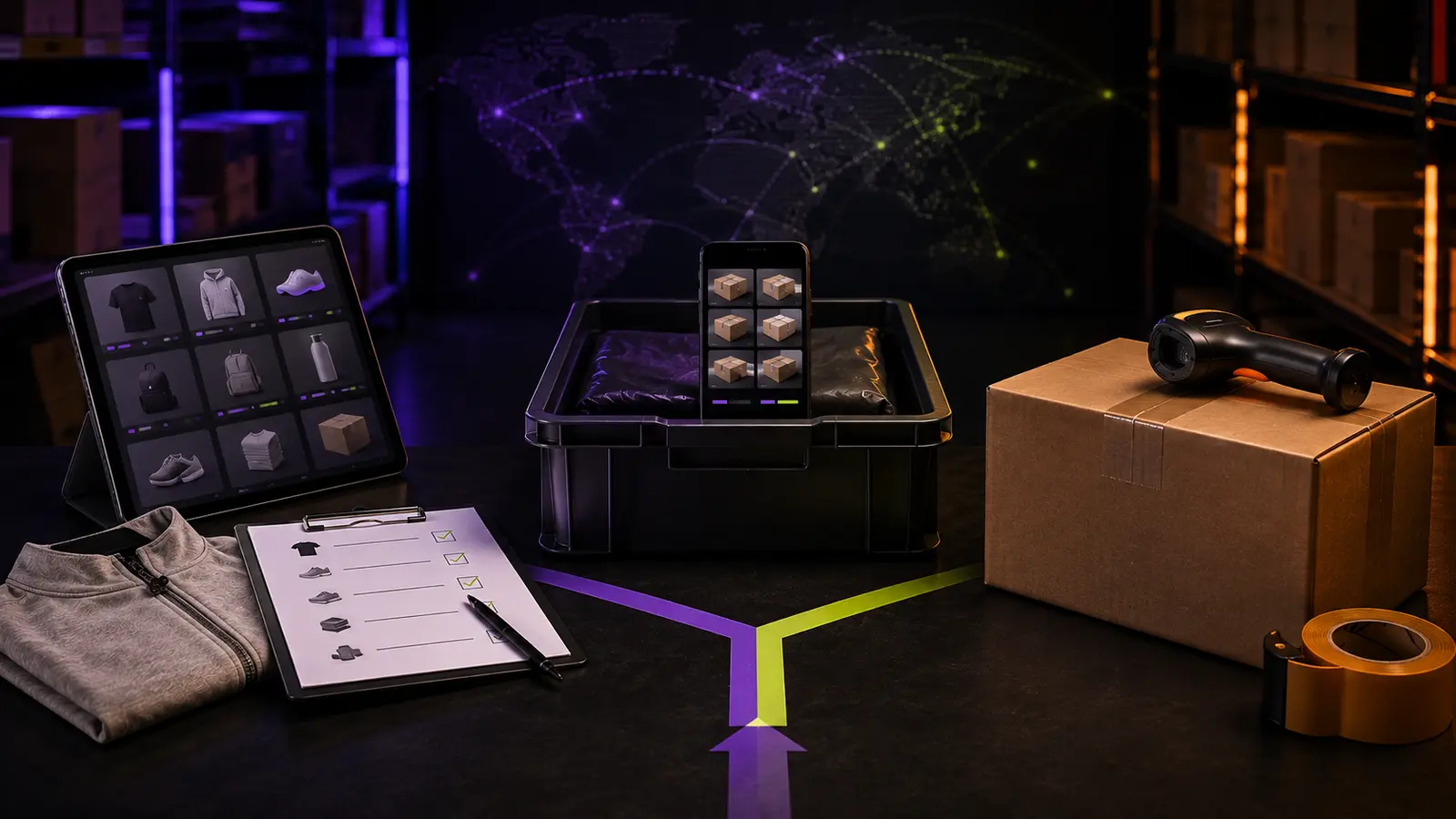
Most agent problems do not begin with a damaged carton or a bad shipping line. They begin earlier, when a buyer selects the wrong intake workflow and assumes the warehouse can reconstruct missing context later. LitBuy publicly offers both professional purchasing and forwarding. Those services can lead to the same warehouse, but they do not begin with the same chain of responsibility. In a purchasing order, the platform participates in obtaining the item from the seller. In a forwarding order, you arrange the domestic purchase or shipment and direct it to the warehouse. The useful question is therefore not which service sounds cheaper or faster. Public information does not support a universal answer. The question is which workflow preserves enough control for this specific order. The method below treats that choice as an operational decision, then builds a clean handoff from seller to warehouse.
Start with the control point, not the product link
Before opening an order form, identify the point you need LitBuy to control. If you need the platform to place the domestic order, preserve the submitted variant and interact with the source-side transaction, purchasing is the natural starting lane. LitBuy describes professional purchasing across 1688, Taobao and WeChat Store, with DIY orders also supported. Record the exact marketplace, seller, item, option and quantity before submission.
Forwarding starts from a different control point. LitBuy describes it as sending items to its warehouse so they can be combined and shipped. You normally control the purchase and domestic shipment before the warehouse receives anything. That gives you flexibility, but it also makes the receiving reference, domestic tracking number and seller parcel split your responsibility. Choose forwarding only when you can maintain that chain. If the seller may divide one checkout into several parcels, your plan must be able to identify every piece without guessing.
Use a five-question lane test
Run five questions for each item. Who will place the domestic order? Who can confirm the selected option with the seller? Who will receive the domestic tracking number? Who can recognize a split shipment? Who holds the evidence if the wrong item arrives? Mostly platform-side answers point toward purchasing. Mostly buyer-side answers point toward forwarding. Mixed answers are a warning to slow down, because a handoff with unclear ownership creates gaps precisely when an exception appears.
Do not choose one lane for an entire haul out of habit. A marketplace item with a clear option may fit purchasing, while something you already own or buy through another domestic arrangement may fit forwarding. The warehouse can ultimately combine eligible items, according to LitBuy's public service description, but separate intake histories should remain separate in your records. One parcel can contain items from both lanes; one evidence trail should never pretend they began the same way.
Separate DIY purchasing from pure forwarding
The phrase DIY order can tempt buyers to treat every manual entry as forwarding. Keep the concepts separate. LitBuy publicly lists DIY orders under professional purchasing, while forwarding is described as sending items to the warehouse. A manual product entry may still ask LitBuy to participate in buying the item. Forwarding means the upstream purchase or shipment is already under your control. The practical distinction is not how many fields you type; it is where the purchasing responsibility begins.
When the interface wording is unclear, write a one-sentence intent before proceeding: either “LitBuy should obtain this specified item from this seller” or “I have arranged this item and need the warehouse to receive it.” That sentence exposes contradictions. If you expect seller communication but select a flow where you control the seller relationship, the expectation is misaligned. If you already paid the seller but create another purchase request, you risk duplicating the transaction.
Build an intake passport before money moves
Every inbound item needs an intake passport. Use a unique short code, item name, color or version, size, quantity, seller name, purchase lane and expected domestic parcel count. For forwarding, add the domestic tracking number as soon as it exists and note whether that number represents one item or several. For purchasing, retain the submitted order identity and any option note. The goal is a compact record that still makes sense when viewed days later without the seller page open.
Photographs are not a substitute for structured fields. A screenshot may show a selected option today but become ambiguous after a listing changes. Pair visual evidence with plain language: “grey zip jacket, size large, one unit,” not “the second option.” Use the same wording in your personal ledger and any available warehouse remark. Consistent names reduce the chance that a receiving photo, seller parcel and original intention become three unrelated stories.
Screen transport risk before choosing either lane
Purchasing and forwarding do not make an item automatically suitable for international shipment. LitBuy's public product notices state that some goods may be unavailable because of cross-border logistics restrictions, regional brand controls or supplier qualification reviews. Its help area also points buyers to prohibited-item and shipping-policy information. Check the current notices before paying a seller, especially when an item contains batteries, liquids, powders, pressurized parts, magnets or other attributes commonly treated differently by transport channels.
Describe the physical item, not only its retail category. Record uncertain attributes in a risk column and resolve them before dispatch to the warehouse where possible. Forwarding does not bypass restrictions, and purchasing approval should not be interpreted as a promise that every international route will accept the item. Domestic purchase eligibility and international transport compatibility are different gates.
Write the inspection standard while the seller can still act
LitBuy advertises free QC and inspection photos when goods arrive. Those images are more useful when you have already decided what must be verified. Create a short inspection standard for identity, quantity and the highest-cost failure. For clothing, that may be size marking, color and a visible construction detail. For a bag, it may be shape, hardware color and strap presence. Keep the list observable; a warehouse photo cannot prove comfort, hidden durability or long-term performance.
The intake lane changes the escalation path, not the visual facts. Under purchasing, your order record should show what LitBuy was asked to obtain. Under forwarding, your seller messages and domestic order record carry more of that context. In both cases, compare the warehouse evidence with the intake passport, not with memory. If a concern appears, describe one visible mismatch at a time and preserve the relevant image before requesting clarification.
Reconcile the warehouse receipt in three passes
First reconcile existence: did every expected domestic parcel or purchased item appear? Second reconcile identity: do the option, quantity and visible characteristics match the passport? Third reconcile condition: is there an observable issue that changes your decision to keep, return, exchange or investigate? LitBuy says users can track storage and inspection progress, so use status changes as prompts for reconciliation rather than as proof that every detail is correct.
For forwarded goods, compare domestic tracking against each warehouse receipt and flag duplicate or missing numbers. For purchasing orders, compare the warehouse entry with the platform order record. Do not merge records merely because two items look similar. A complete haul is a collection of resolved item histories, not a pile with the right total count. Mark each row accepted, exception or awaiting evidence, and never submit an unresolved row simply to keep the rest moving.
Control split shipments and anonymous parcels
Split shipments are where forwarding discipline matters most. One seller order can produce multiple domestic packages, or several items can share one tracking number. Maintain an expected-parcel field that can change without deleting the earlier value. When a new tracking number appears, attach it to the original intake code immediately. If an unrecognized receipt appears, search by tracking, sender, approximate weight and item description before assigning it. A confident guess is still a weak chain of custody.
Purchasing orders also benefit from parcel awareness because sellers can dispatch items separately. The difference is that the platform-side order provides another reconciliation reference. In either lane, avoid naming warehouse items only by arrival order. “Package three” loses meaning as soon as a late parcel appears. A durable name combines your intake code and a physical description, allowing an item to remain identifiable through inspection, storage, consolidation and final packing.
Plan consolidation without erasing origin
LitBuy states that warehouse items can be combined and safely shipped, and it advertises packing or reinforcement based on item size. Consolidation should combine physical goods, not collapse their documentation. Keep the original lane, seller and domestic reference attached to every item even after you decide they will share an international parcel. That history helps if a final parcel is missing one unit or if a warehouse image must be traced back to a seller order.
Create a consolidation table with four columns: item code, accepted status, transport attribute and packaging note. Only accepted items enter the packing group. A forwarded fragile object may need its original support retained; a purchased garment may be suitable for compact packing. State needs as outcomes rather than vague requests. “Protect the rigid edge from bending” is more useful than “pack carefully.” Do not assume a certain packing method, fee or weight reduction until the current interface confirms it.
Use storage time as a reconciliation budget
LitBuy currently advertises up to 120 days of storage with the first 90 days free, while its help center notes that fees can apply after an overdue period. Treat those published limits as boundaries to verify in your account, not as permission to postpone decisions. The useful storage window is the time available to resolve identities, collect missing evidence and assemble a compatible parcel. It should have internal deadlines long before any published limit becomes relevant.
Set a receiving deadline for every expected parcel, an exception deadline for every disputed row and a consolidation date for the accepted group. If a purchasing order remains unresolved, keep it outside the packing group. Storage is operational breathing room; it is not a repair for missing records or unclear ownership.
Finish with a responsibility handoff
Before international submission, read the haul as a responsibility map. Every item should show who placed the domestic order, which tracking or order record identifies it, what the warehouse received, what inspection evidence was reviewed and whether any transport attribute remains open. If one of those fields has no owner, pause. The final parcel should not inherit uncertainty that could have been resolved while the seller and warehouse records were still close at hand.
The best intake lane is the one that leaves the fewest unexplained transitions. Choose purchasing when you need LitBuy involved at the buying stage and can express the item clearly. Choose forwarding when you already control the upstream transaction and can supply disciplined receiving data. Then preserve the distinction until every item is accepted. That simple habit turns two service options into a reliable operating system instead of two buttons that happen to point toward the same warehouse.