
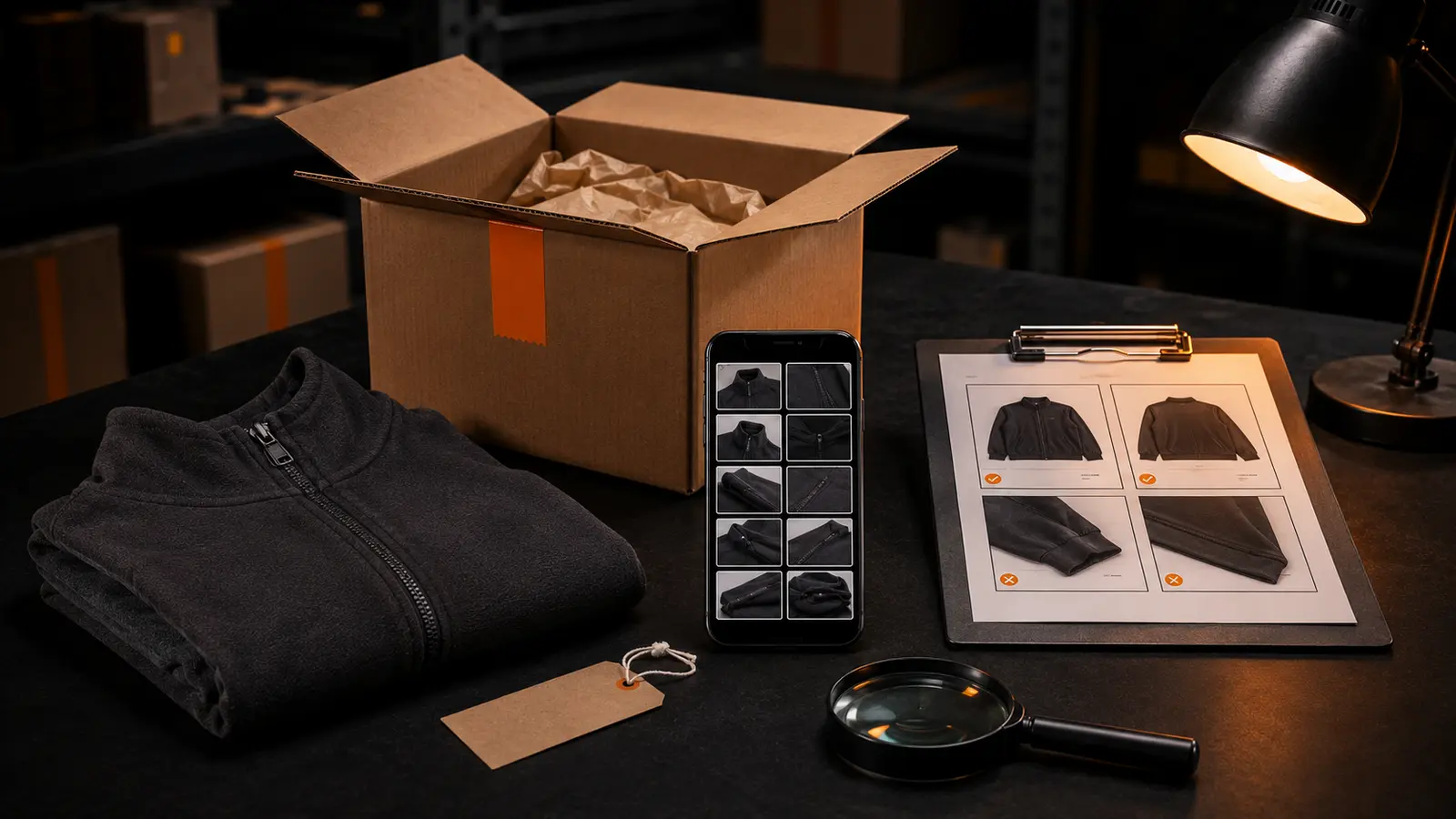
A return request does not become strong because the buyer is disappointed. It becomes strong when the problem is observable, tied to the original order and presented while the item is still operationally separate from the international parcel. LitBuy publicly describes free inspection photos, order and storage tracking, and full after-sales support. Its site also exposes refund and returns-and-exchanges policy areas. Those tools create an opportunity, not an automatic outcome. Seller rules, item condition and the options shown in the current order interface still govern what can happen. The useful skill is therefore evidence design: turning a vague reaction to warehouse photos into a compact case that another person can verify and act on without reconstructing the whole purchase. This guide shows how to build that case, choose between clarification, exchange and return, and keep one exception from contaminating the rest of a haul.
Quarantine the item before discussing the remedy
The first move is administrative, not emotional. Mark the warehouse item as unresolved and keep it outside every parcel candidate. Do not approve it, group it with accepted goods or make packaging decisions that assume it will ship. LitBuy says users can track storage, inspection and shipping progress, so treat the visible status as a control point. Capture the item identifier, order identifier, warehouse arrival date and current status in one row. That row is the boundary around the exception.
Quarantine prevents two common failures. First, a disputed item cannot be submitted accidentally while you are still waiting for an answer. Second, the rest of the haul can continue to be evaluated without inheriting the same uncertainty. Use three temporary states: evidence incomplete, remedy requested and resolution verified. Never label an item fixed merely because a message was sent. The replacement must arrive and pass its own check, or the return or refund outcome must be visible in the relevant record.
Rebuild the purchase promise in plain language
Before studying the defect, write down what the seller was supposed to provide. LitBuy publicly lists professional purchasing for 1688, Taobao and WeChat Store, with DIY orders also supported. Whichever entry path you used, preserve the marketplace, seller, listing title, selected option, quantity and any note submitted with the order. Then convert those fields into one sentence: one charcoal jacket, marked size large, with a detachable hood. This is the purchase promise your evidence must test.
Avoid relying on labels such as wrong item or bad quality. They are conclusions, not specifications. A reviewer needs to see the promised attribute and the observed attribute side by side. If the listing changed, your saved selection record matters more than the current thumbnail. If a choice was written manually, quote the exact wording you submitted. Do not improve or reinterpret an unclear note after the fact. Honest ambiguity is part of the case and may change whether clarification, exchange or return is realistic.
Classify the exception before collecting more photos
Most warehouse exceptions fit one primary class: identity, quantity, visible condition, missing component or unresolved uncertainty. Identity covers the wrong color, version, marked size or model. Quantity covers missing or excess units. Visible condition covers a stain, crack, deformation or other observable damage. Missing component covers an accessory promised as part of the selected configuration. Unresolved uncertainty means the existing evidence simply does not show the decisive area clearly enough.
Choose one primary class even if the item has several annoyances. The primary class should be the issue that independently changes your keep-or-send decision. Record secondary observations separately. This keeps the request legible and prevents a serious mismatch from being diluted by subjective complaints. It also tells you whether another inspection view could settle the matter. A hidden measurement label may need clarification; an obviously different color may already be an identity mismatch.
Build a three-frame evidence file
LitBuy advertises free QC and inspection photos when goods reach the warehouse. Turn those images into a three-frame file. Frame one is the order frame: the saved selected option or order record. Frame two is the warehouse frame: the clearest image showing the received item. Frame three is the contrast frame: a crop or written comparison that points to one verifiable difference. Keep the original images as well as any crop so context is not lost.
Name each frame by function rather than emotion. Use selected option, received label and visible mismatch, not proof they cheated. Add a single caption stating where the viewer should look. For example: the order record shows blue; the warehouse front view shows green under neutral light. If lighting could explain the difference, say so and request a confirming view rather than declaring a verdict. Strong evidence distinguishes what is visible from what is inferred.
Ask only for evidence that can change the decision
More images are useful only when they close a defined gap. Write the decision first: keep if the size label is large; exchange if it is medium. Then request the smallest observable view that resolves that branch. For clothing, it may be the sewn label or a measurement with both tape endpoints visible. For a bag, it may be the hardware color and included strap. For a boxed item, it may be the model mark and the contents laid out together.
Do not ask warehouse staff to judge authenticity, comfort, long-term durability or seller intent from a photograph. Those claims exceed what an inspection image can establish. Also avoid a shopping list of twenty angles when one close view would answer the case. A focused request is easier to execute and compare. Once the new evidence arrives, append it to the same file and record whether it confirms the order, confirms the mismatch or remains inconclusive.
Choose clarification, exchange or return deliberately
Clarification is appropriate when the evidence is incomplete and the item might still match. Exchange is a candidate when you still want the product, the required replacement can be specified precisely and the current seller or order interface offers that path. Return is a candidate when the item no longer has a useful replacement path or the mismatch changes the value of the purchase. These are operational choices, not guarantees of seller acceptance.
Check the current order screen and the applicable LitBuy policy area before selecting a remedy. Do not import a deadline, fee or eligibility rule from another seller, marketplace or old guide. Record exactly what the interface shows on the day you act, including any available action and stated condition. If only a support request is available, describe the desired outcome and an acceptable fallback. A clear priority prevents repeated messages when the first remedy is unavailable.
Write a request that can be forwarded without translation by guesswork
A useful request has five lines: order identity, promised attribute, observed attribute, evidence reference and requested remedy. Keep each line factual. For example: this order was submitted as one black wallet; the warehouse image shows a brown item; compare the selected-option record with the front-view photo; please request an exchange for black; if black is unavailable, request a return. That format lets support understand the case and pass it onward without inventing missing context.
Remove arguments about how obvious the problem is, predictions about what the seller must do and threats about future disputes. They consume attention without improving verification. If the issue is physical damage, identify its location and visible extent. If quantity is wrong, state ordered, received and missing counts. If a component is absent, show that it belonged to the selected configuration. One message should describe one item and one primary exception.
Preserve the clock without inventing a deadline
Returns can be time-sensitive, but an unsupported universal countdown is worse than no number. Create a case clock using only dates you can verify: warehouse arrival, first inspection availability, first mismatch report, evidence request, support reply and remedy submission. Then read the current seller and platform information for any displayed limit. If a deadline appears, store the wording and the date you observed it rather than paraphrasing it from memory.
Act promptly even when no exact limit is visible. Prompt does not mean rushed; it means the evidence file is built before unrelated parcel work distracts you. Set an internal next-action date for every open case. If support needs another photo or seller answer, the case remains active. LitBuy advertises up to 120 days of storage with the first 90 days free, but storage capacity should not be mistaken for a return window. They are different operational clocks.
Verify the outcome instead of trusting the conversation
A message saying the seller agreed is progress, not closure. For an exchange, retain the original item identity, the outgoing status if shown and the replacement record. When the replacement reaches the warehouse, treat it as a new receipt: compare option, quantity and visible condition again. Never reuse the original approval simply because the seller says the correct version was sent. The second item needs its own evidence verdict.
For a return or refund, confirm the result in the order or account record available to you. Record the final state and any amount or condition exactly as displayed, without assuming processing speed or payment timing. If the case is denied, preserve the stated reason and decide whether the evidence answers that reason. Repeating the same complaint is rarely useful. A revised escalation should add a missing fact, correct a misunderstanding or explain why the evidence meets the stated condition.
Close the exception before rebuilding the parcel
Only a verified replacement or a consciously accepted original item may re-enter the parcel plan. Update the manifest with the final warehouse identifier and remove obsolete references that could cause the wrong item to be packed. If the item leaves the plan, recalculate the parcel without assuming its former weight, dimensions or packaging role. LitBuy states that warehouse items can be combined and shipped, but consolidation should happen after each component has a settled identity and status.
Archive the case as a reusable pattern: purchase promise, exception class, decisive evidence, requested remedy and verified outcome. The purpose is not to build a grievance library. It is to improve the next order note and inspection standard. A return handled well starts before the return button appears. When the selected option is explicit, the warehouse evidence is targeted and every unresolved item is quarantined, support receives a case it can process rather than a feeling it must decode.